
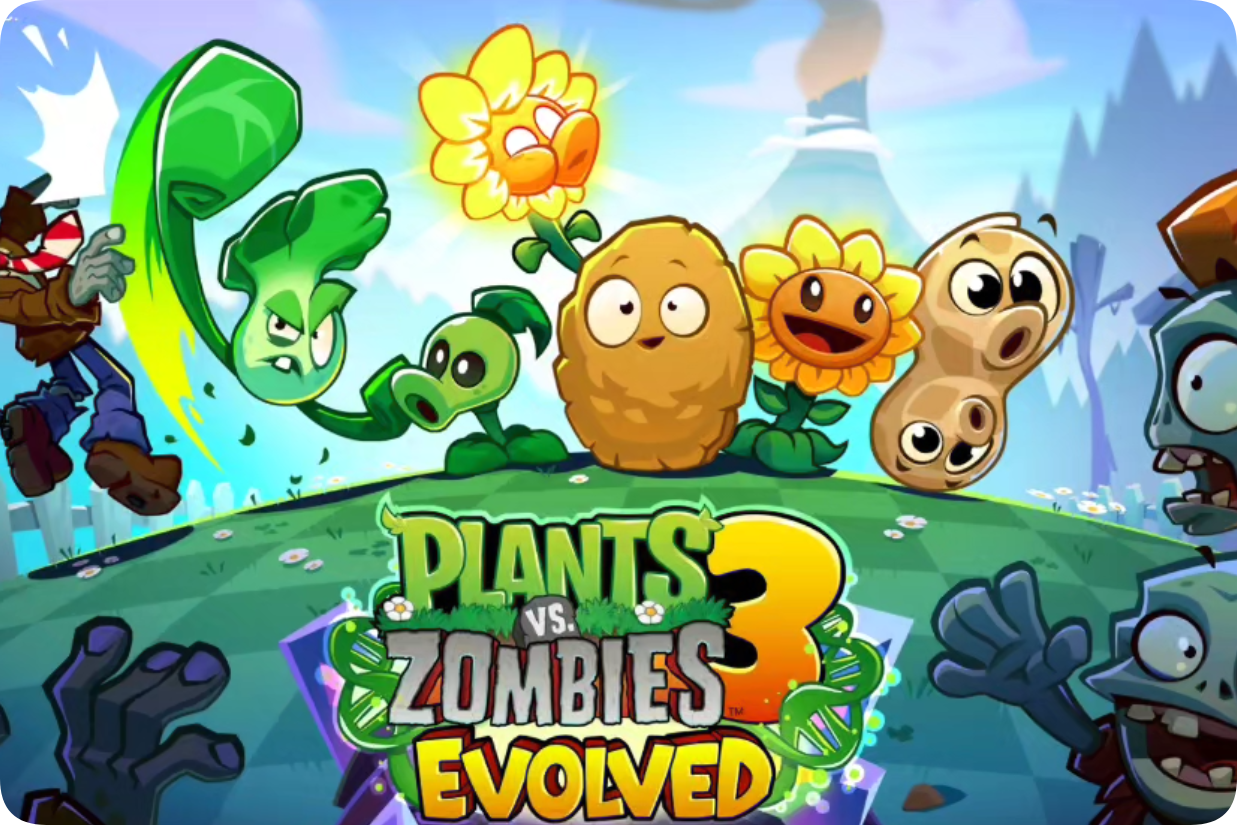
Plants vs. Zombies 3: Evolved re-imagines the classic five-lane tower-defence setup with a brand-new “Merge, Mutate, Mayhem” mechanic: players combine identical plants mid-battle to evolve them into stronger forms. The visuals remain the cheerful ennui of the franchise, but the pacing, lanes and economy now demand faster decisions and more fusion-thinking.
To better understand how this hybrid of old and new motivates players, let’s explore its Octalysis breakdown.
Octalysis Rating Table
| Core Drive | Score (1–10) | Brief Description |
|---|---|---|
| Meaning | 7 | The franchise’s iconic garden-versus-zombies setting remains, enhanced by the “meteor crash + plant evolution” narrative. |
| Accomplishment | 8 | Clearing levels with merged plants and seeing tangible power jumps gives satisfying benchmarks. |
| Empowerment | 7 | The merge mechanic provides genuine control over progression and plant evolution, adding strategic depth. |
| Ownership | 6 | Collecting plants, upgrading them and transforming them via merges builds attachment, albeit somewhat gated. |
| Social Influence | 4 | There are community events and social features, but the core experience remains single-player focused. |
| Scarcity | 6 | Merge materials, rare plants and limited-time content provide moderate scarcity to drive engagement. |
| Unpredictability | 7 | The new merge outcomes, evolving plants and changing zombie types add freshness to the familiar format. |
| Avoidance | 4 | Failures are not hugely punitive, encouraging experimentation rather than punishing mistakes. |
Evaluation Notes:
Scoring range: 1–10. Higher scores reflect stronger implementation of the core drive and greater player motivation.
GScore (Gamification Score): Calculated using the Octalysis Framework tool.
Octalysis Radar Chart
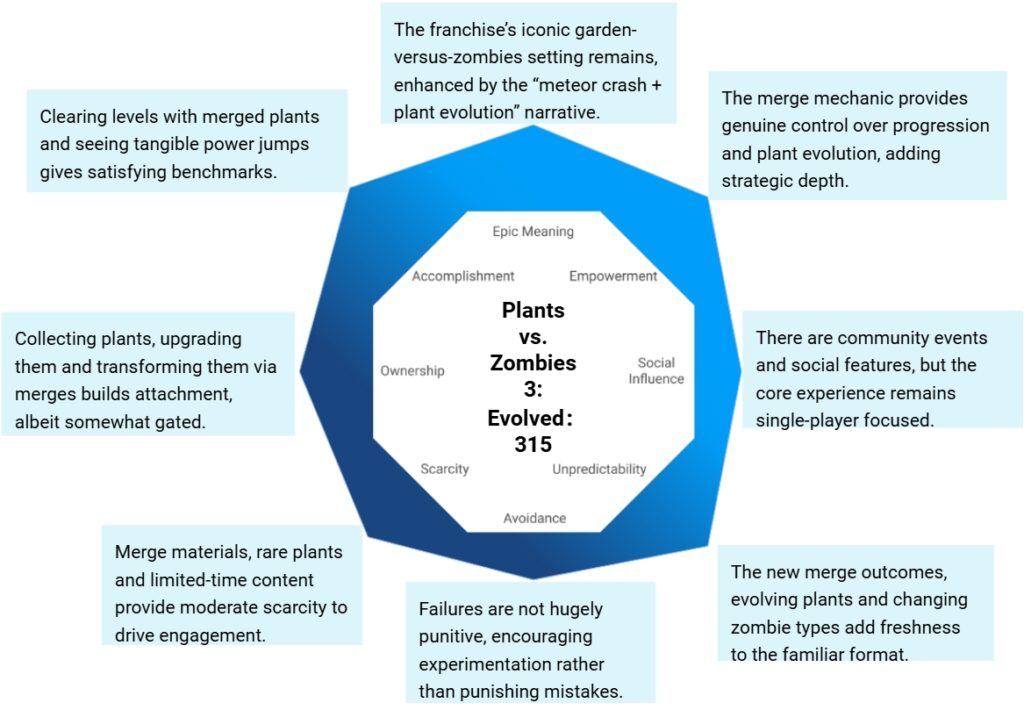
With the chart overviewed, let’s dive deeper into each core drive to see how the game performs in detail.
Detailed Analysis
1. Meaning (7/10)
The game uses the familiar garden versus zombie conflict, but introduces a meteor impact and plant evolution narrative twist (plants fuse after meteor radiation).This gives players a renewed story impetus: defending the meteor’s power as well as the lawn. The theme pairs well with its strategy mechanics, though for longtime fans the shift to fusion may feel more mechanical than deeply thematic.
2. Accomplishment (8/10)
Success in this game comes from clearing levels while effectively using the merge system: seeing two Tier I plants become a Tier II and then a Tier III gives visible growth. With over 200 levels listed in the guide phase.The feeling of progression is clear and rewarding, especially when players overcome tougher zombie waves with their upgraded plants.
3. Empowerment (7/10)
Players have real agency: they choose whether to invest early in basic plants or save sun to merge for more powerful ones. The merge mechanic opens up meaningful decisions: resource allocation, placement and timing.This empowers players beyond simply placing plants in lanes; they’re strategising evolution paths. The trade-off is the gating of high tiers which can dampen immediate empowerment for some.
4. Ownership (6/10)
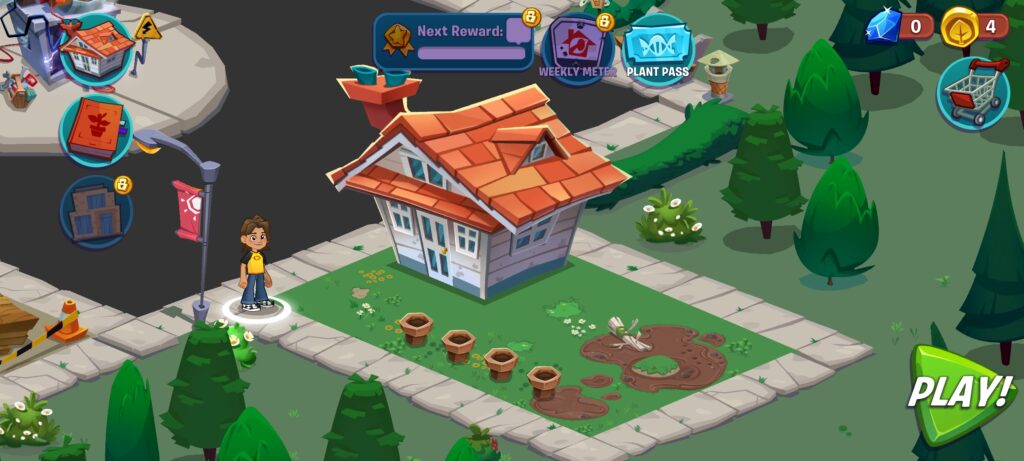
Collecting plants, performing upgrades and evolving them gives a sense of building a personalised arsenal. The “home base” customisation and neighbourhood elements support that ownership.However, the early access status and some locked content mean full ownership feels limited until global release.

5. Social Influence (4/10)
The game offers community events and neighbourhood features, yet the core game loop remains solo tower defence. Players may share strategies or compare progress, but the social drive is secondary. Some player feedback highlights the lack of deeper social mechanics.
6. Scarcity (6/10)
Merge materials, new plants and special zombie types function as limited resources that drive repetition and engagement. The requirement to merge and evolve introduces a pacing mechanism that keeps players returning. On the flip side, some players report that progression can feel slowed by scarcity of materials.
7. Unpredictability (7/10)
The inclusion of new zombie variants (Stealth Imp, Rock-N-Rollin’ Imp) and evolving plant outcomes means each level may play slightly differently.The merge mechanic especially adds an unpredictable element: you may discover unexpected combinations or strategies mid-battle, which keeps the experience from feeling stale.
8. Avoidance (4/10)
Failure results in losing the level attempt, maybe resetting progress for that stage, but the game does not impose harsh permanent penalties—players can retry and experiment freely. This low-risk environment encourages play and reduces frustration, though it may reduce tension for those seeking high-stakes challenge.
Overall Summary & Recommendation
After analysing all eight core drives, it becomes evident that Plants vs. Zombies 3: Evolved thrives on its new mechanics and the way they refresh a classic formula.
The game succeeds in Accomplishment and Empowerment, empowering players through strategic merging and evolution, while retaining the franchise’s signature charm. It offers moderate social and ownership drives, and maintains just enough unpredictability to stay engaging. For fans of the tower defence genre and especially those who enjoyed earlier PvZ titles, this version offers a meaningful evolution rather than a simple sequel. The gating and early-access limitations are caveats, but the experience so far is strong.
[Read More] https://us.09gamereview.com/blog/
[YouTube] https://www.youtube.com/@09GameReview
Leave a Reply