
Looking for a game to drive your living room crazy? Party Legends: 234 Mini Battle is precisely that kind of ultimate icebreaker and mood-maker. It’s not a deep solo adventure, but a game collection platform specifically designed for 2-4 players competing on the same couch. From classic remakes to quirky mini-games, it uses the simplest rules to amplify party energy, letting a group of people reach peak fun in a short time. The most important thing is the laughter it brings to the game night.
Today, 09GameReview uses the Octalysis framework to dissect how this seemingly simple game achieves precise positioning for the “social gathering” scenario. How does its design encourage friends to put down their phones and gather around one tablet?
Octalysis Scorecard
Focusing on Social & Instant Fun
Based on hands-on experience, the following is an evaluation of “Party Legends: 234 Mini Battle” across the eight core drives.
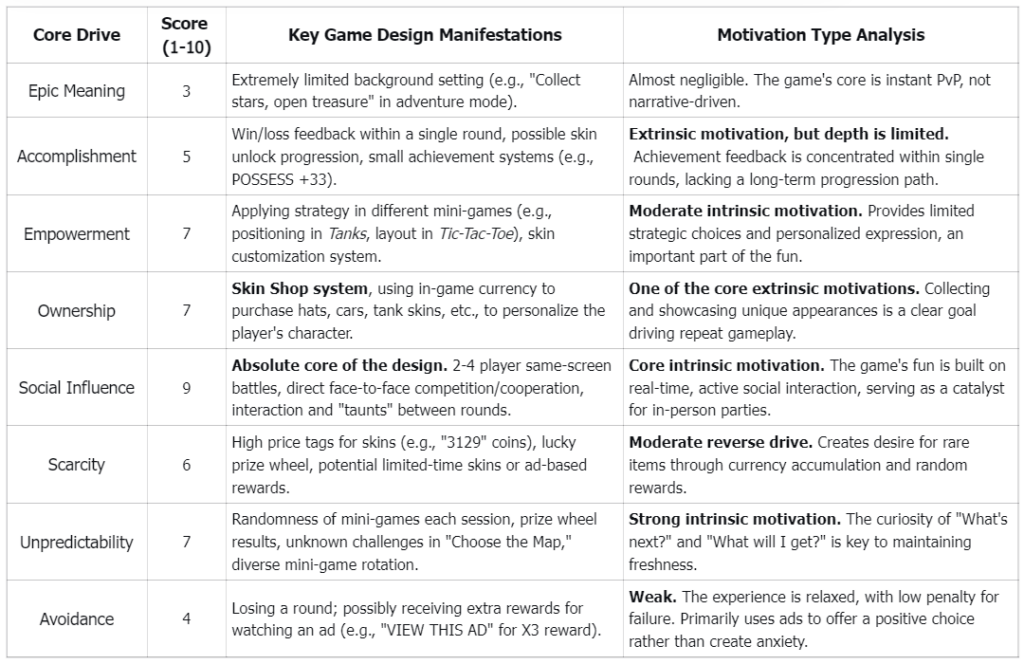
Evaluation Notes:
Scoring range: 1–10. Higher scores reflect stronger implementation of the core drive and greater player motivation.
GScore (Gamification Score): Calculated using the Octalysis Framework tool.
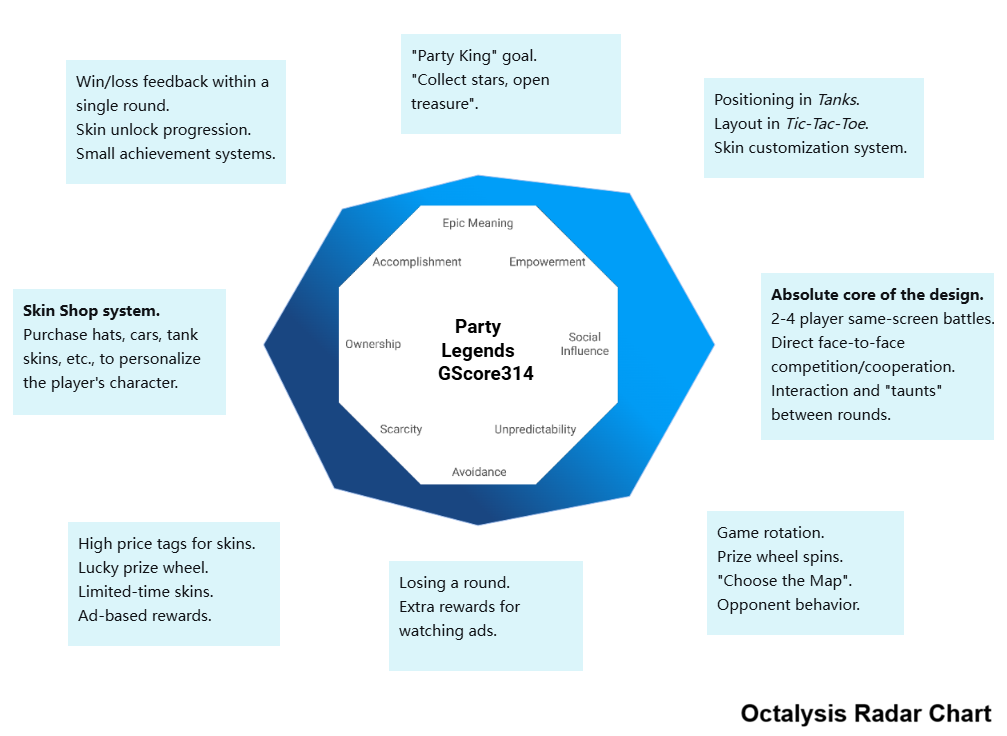
Octalysis Radar Chart
The radar chart clearly shows the game’s design focus heavily leans towards Social Influence and Unpredictability, while other motivational drives are generally weaker, especially long-term goal and progression systems. This accurately reflects its positioning as a “play one round, done” party game.
In-Depth Analysis of Core Drives
1. Epic Meaning (3/10)
No Epic Story, Just Laughs
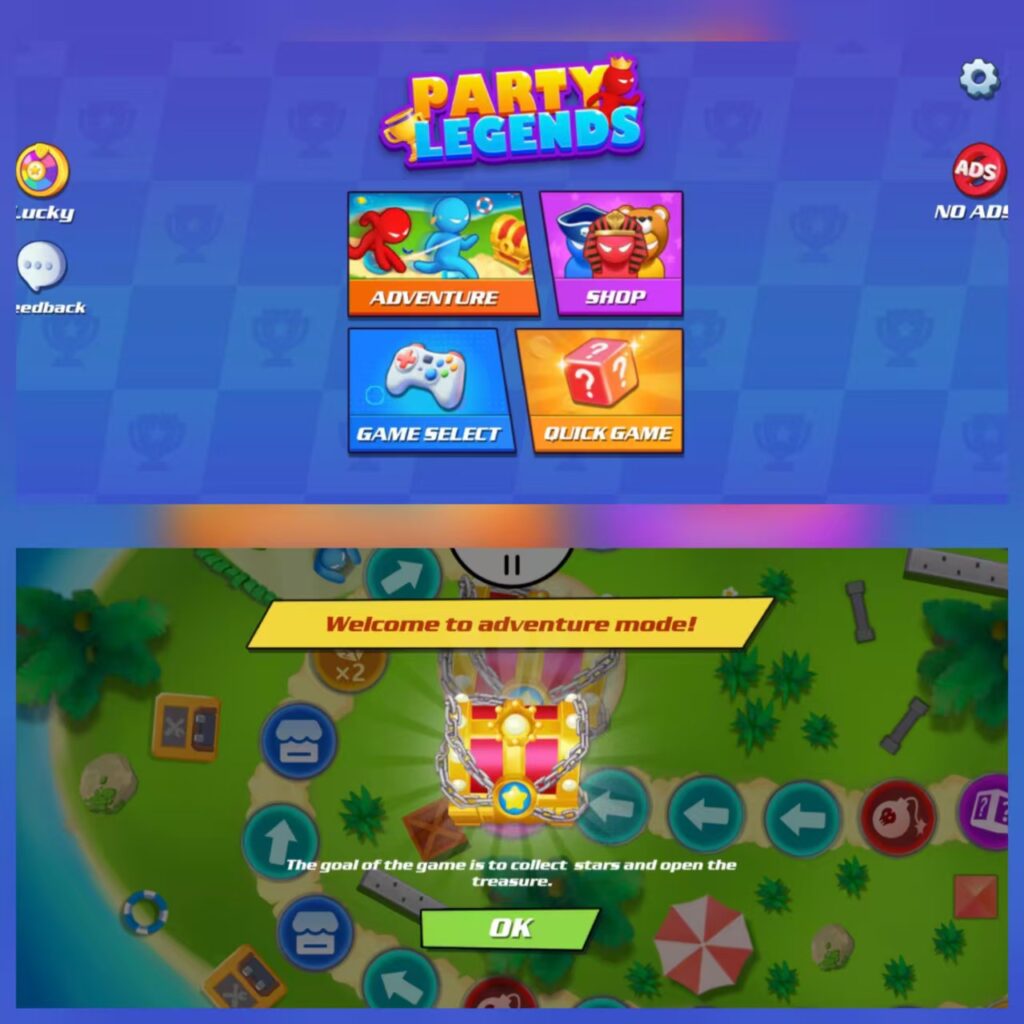
For a pure party game, it doesn’t need a world-saving plot. In “ADVENTURE” mode, the game gives a simple directive: “The goal is to collect stars and open chests.” This isn’t a flaw, but precise targeting. For a game aiming to get players up to speed and directly competing within minutes, complex lore is counterproductive. Its “mission” is simple: beat the friends sitting next to you.
2. Accomplishment (5/10)
Instant Gratification
The game almost entirely avoids the “energy system” or using timers to force waits. This is wise design. It focuses on providing high-quality, quick bursts of fun rather than bogging players down with long-term upgrade grinds, perfectly fitting its role as a party tool.
3. Empowerment (7/10)
Micro-Strategy in the Arena
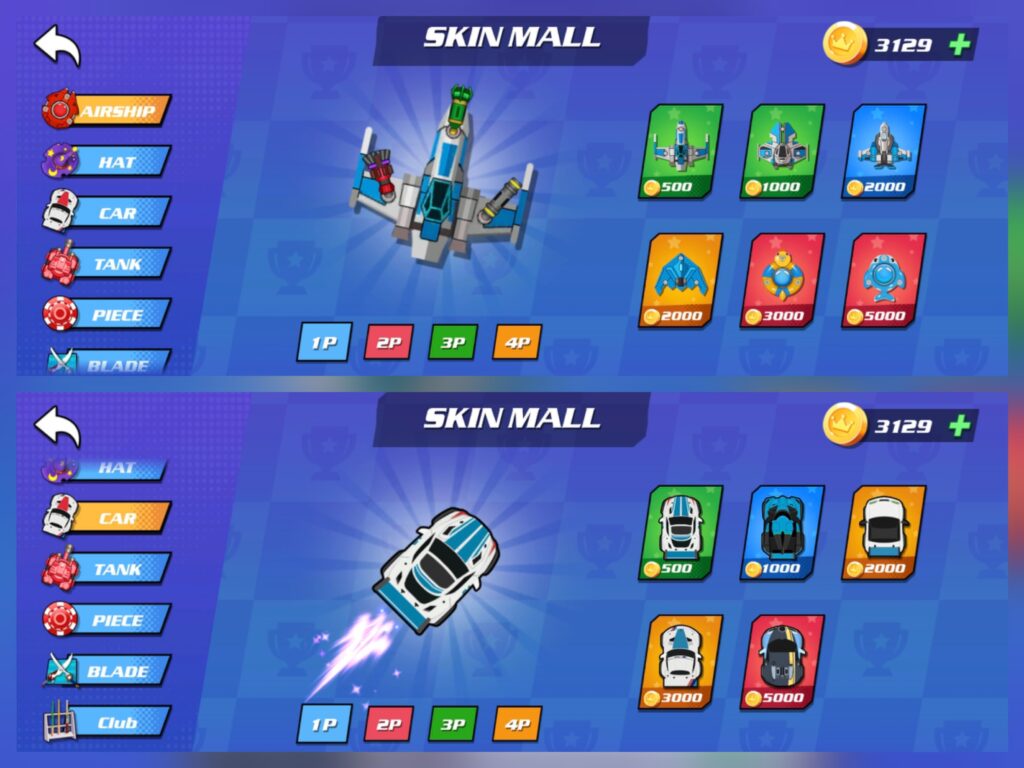
While each mini-game has simple rules, they still offer room for strategy and skill expression. Outmaneuvering opponents in Tanks, setting traps in Tic-Tac-Toe, finding the perfect drift angle in Racing. Additionally, the Skin Shop allows players to personalize their characters’ appearance with different hats, vehicles, and outfits. This customization doesn’t affect gameplay but satisfies the desire for self-expression and creativity.
4. Ownership (7/10)
The Joy of Personalization
The core loop of earning in-game currency (coins) drives engagement. Through gameplay, players earn coins to spend in the Skin Shop on various cosmetic items for their characters. From a cool racing car to a funny hat, these items, while purely visual, grant players the pleasure of “owning” and “showing off,” providing a clear short-term goal within the gameplay loop.
5. Social Influence (9/10)
This is the absolute heart and goal of Party Legends’ design. Its success hinges entirely on creating a fun social catalyst:
- The Magic of Couch Competition: 2-4 players share one device. Everyone’s actions and reactions are right in front of each other, creating an immediacy online games can’t match.
- Direct Emotional Exchange: Cheers of victory, groans of defeat, playful “taunts” directed at opponents—all emotions are amplified through real-time, face-to-face interaction.
- The Perfect Social Lubricant: Whether among friends or new acquaintances, it quickly breaks the ice and creates shared, lively memories.
6. Scarcity (6/10)
Low-Pressure Design
The game doesn’t use scarce resources to “force” engagement. Paid items (skins) primarily incentivize repeated play to accumulate wealth, maintaining an overall relaxed, fun atmosphere. The Lucky Wheel introduces a light element of chance and desire, with the hope of winning rare items adding a small layer of anticipation. Watching an optional ad for a reward also presents a choice, not a demand.
7. Unpredictability (7/10)
Led by a Sense of Whimsy
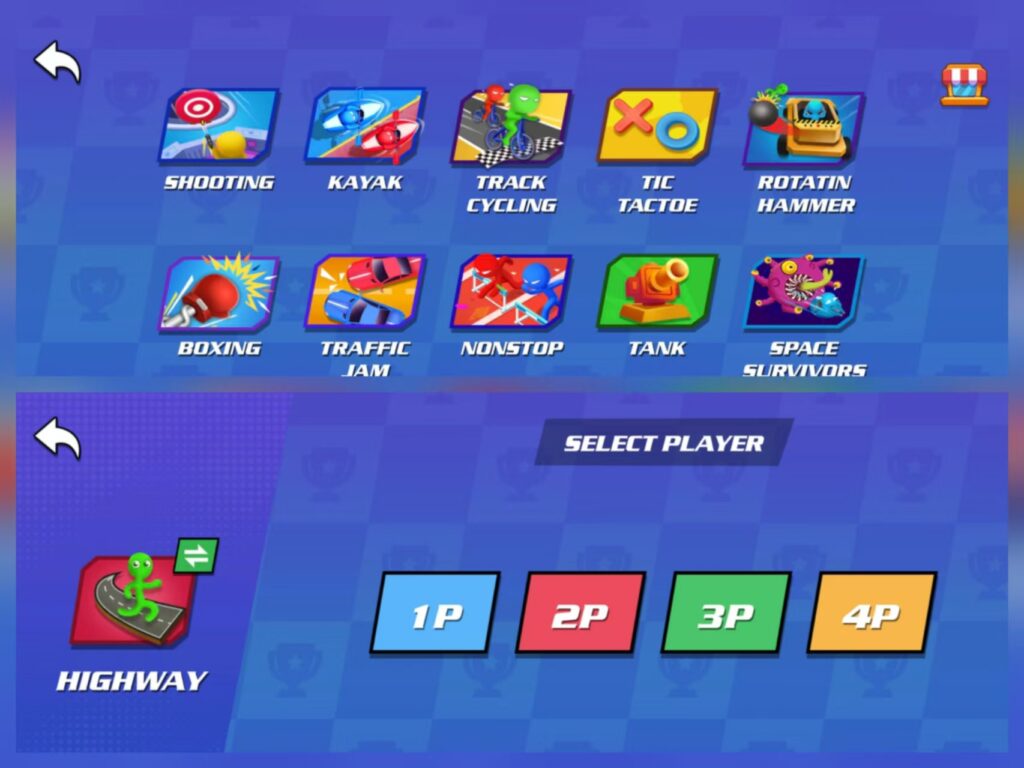
A core appeal is the “mini-game roulette.” When selecting “Choose Map,” players don’t know the next challenge—will it be Space Run or Survivor? This curiosity about “what’s next,” coupled with the unpredictable outcomes within each round caused by physics and opponent actions, is key to maintaining freshness and driving the “one more game” impulse.
8. Avoidance (4/10)
Lightweight Stakes
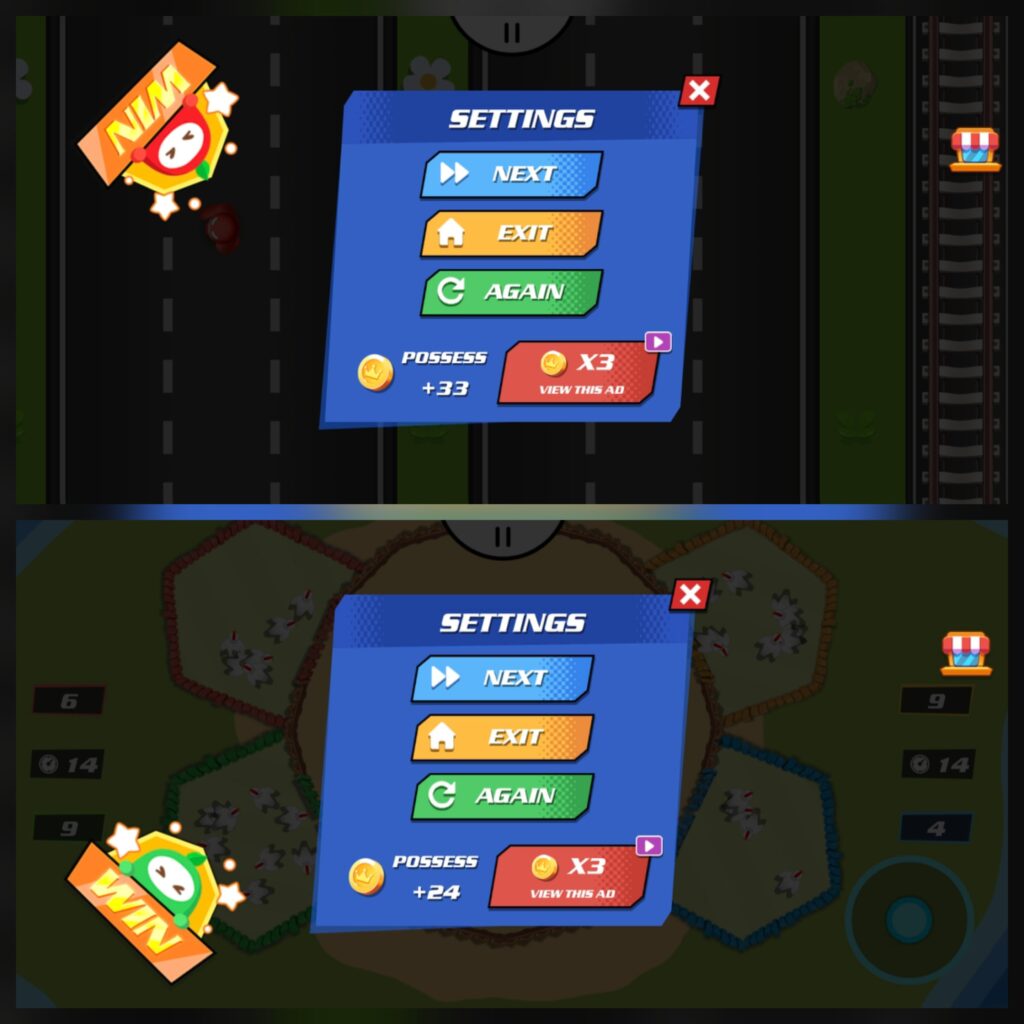
The experience is very forgiving. It doesn’t use harsh penalties or progress loss to “punish” players. Its primary application of this drive is light and offers a positive choice: watching an ad (“VIEW THIS AD”) can grant an immediate extra reward after a round. This is a reward-based approach, not one designed to create anxiety, fitting its casual party game positioning.
Conclusion
Party Legends: 234 Mini Battle is a brilliantly “toy-like” game. In the Octalysis analysis, its exceptionally strong Social drive is precisely what defines it. It doesn’t chase complex personal progression or epic stories, but focuses purely on facilitating fun within a social circle—and in this, its design is precise and effective.
This analysis is based on the genuine gameplay experience of the 09GameReview team and the Octalysis framework. The review is neutral and provided for reference.
Ready to start your party? search for Party Legends: 234 Mini Battle on the Google Play Store to download.
Leave a Reply