
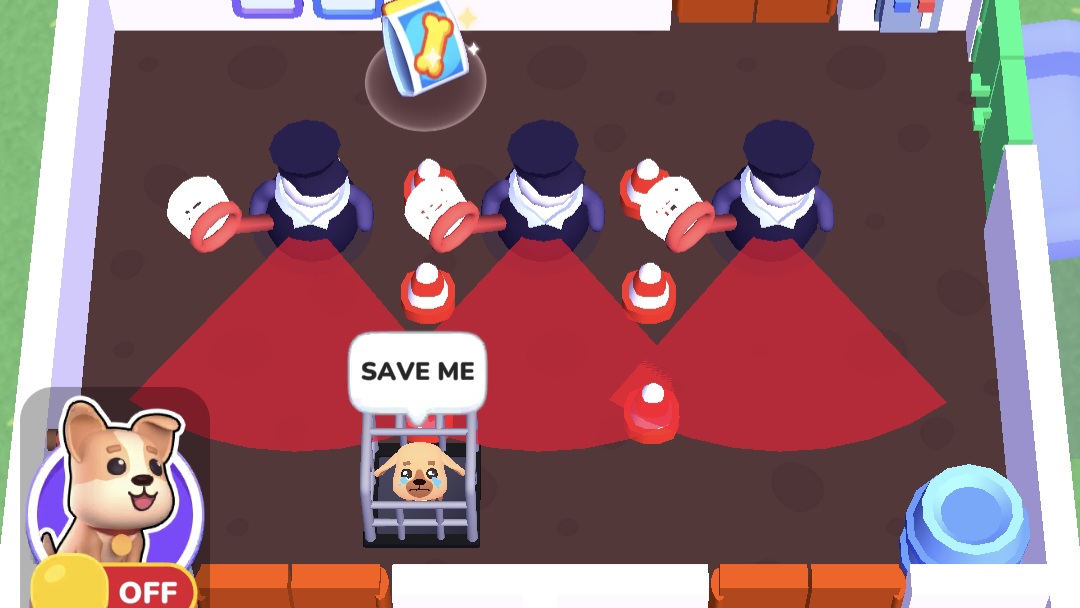
Is Dog Escape a Heartwarming Game or a Calculated Trap? – A Mixed Experience Under Octalysis Analysis
The theme of “rescuing puppies” naturally tugs at the heartstrings. Dog Escape capitalizes on this perfectly, wrapping classic tile-matching puzzle gameplay in an adorable package of cute dog imagery. However, beneath its warm and fuzzy surface, does it also intertwine the familiar “hooks” and “pressure” of modern free-to-play mobile games?
Today, we once again employ the Octalysis Framework to delve deep into this seemingly simple puzzle game. We will look beyond its “cuteness” to examine how its design balances emotional drives with its business model, and whether it ultimately brings relaxation to players or just another form of a to-do list.
Core gameplay: Swipe to guide puppies through mazes and unlock more puppies and skins.
Octalysis Scorecard
We scored Dog Escape across eight Core Drives of player motivation.
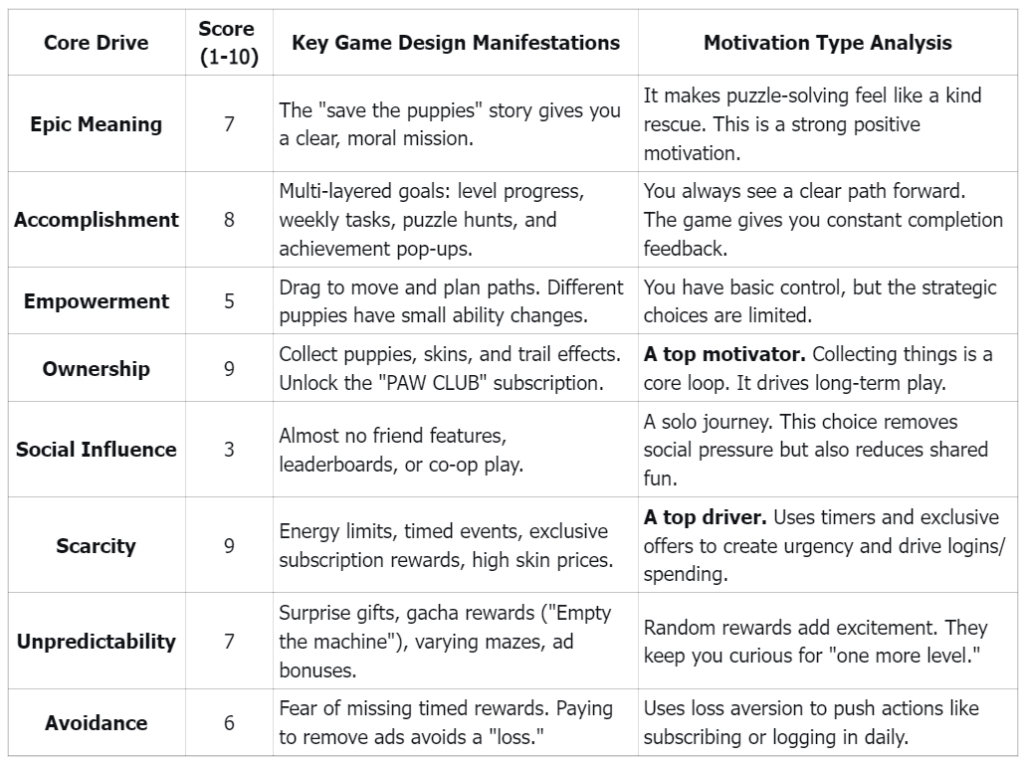
Evaluation Notes:
Scoring range: 1–10. Higher scores reflect stronger implementation of the core drive and greater player motivation.
GScore (Gamification Score): Calculated using the Octalysis Framework tool.
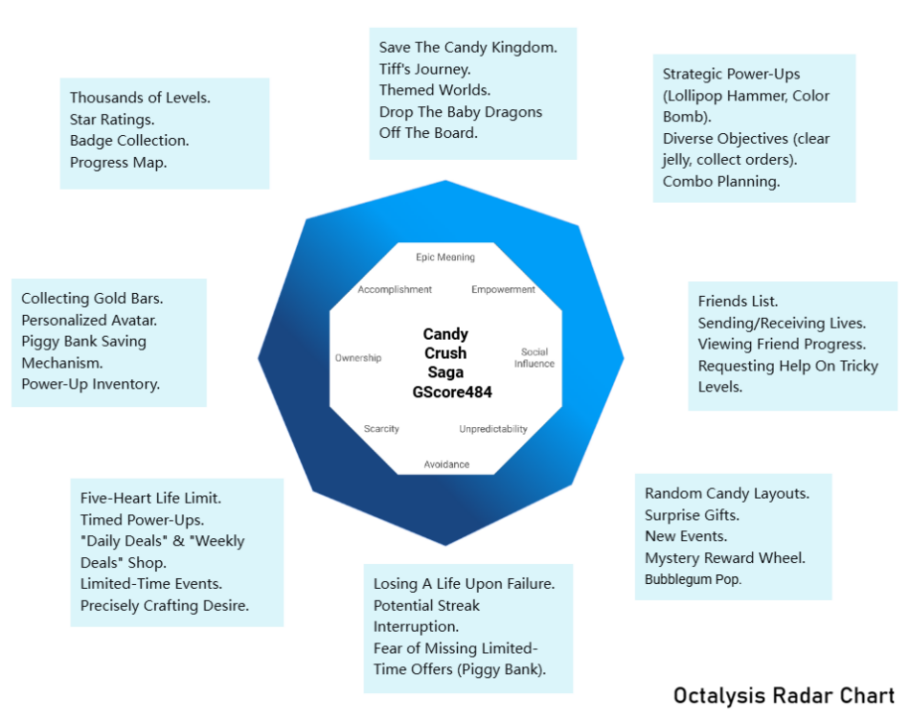
Octalysis Radar Chart
The design focuses on two peaks: Ownership (Collection) and Scarcity (Limits). Meaning and Accomplishment provide support. The Social aspect is almost absent.
Detailed Analysis
1. Epic Meaning (7/10)
The game gives players a heartwarming goal: saving cute puppies. This turns abstract puzzles into emotional rescues. The simple story makes repetitive play feel good. You feel like you’re helping, which softens the other game mechanics.
2. Accomplishment (8/10)
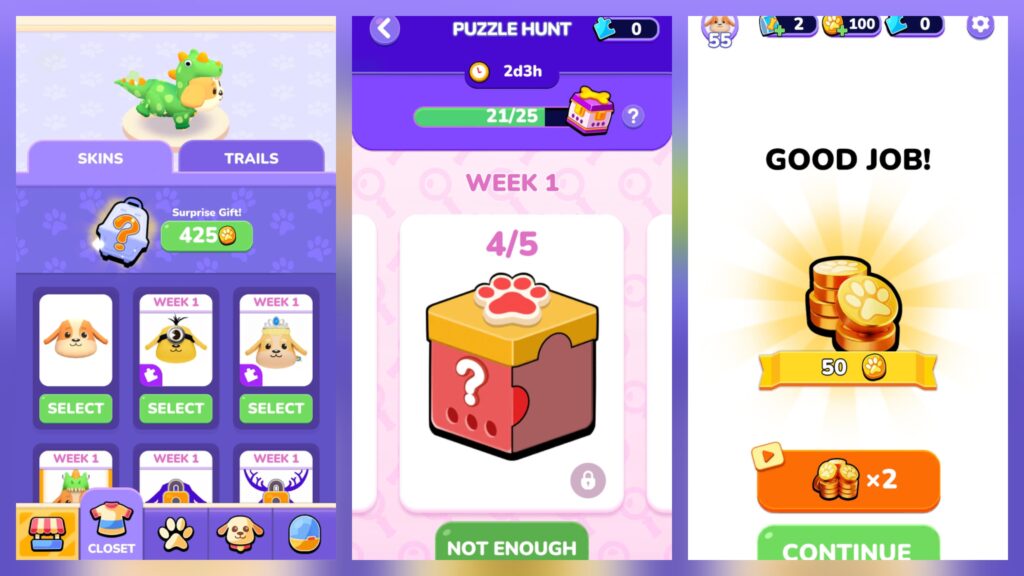
The game uses a combination of systems to deliver a sense of accomplishment: Clear levels, weekly tasks, and timed “Puzzle Hunts” create short-term goals. Pop-ups and rewards give instant feedback. The game breaks big goals into small, manageable steps.
3. Empowerment (5/10)
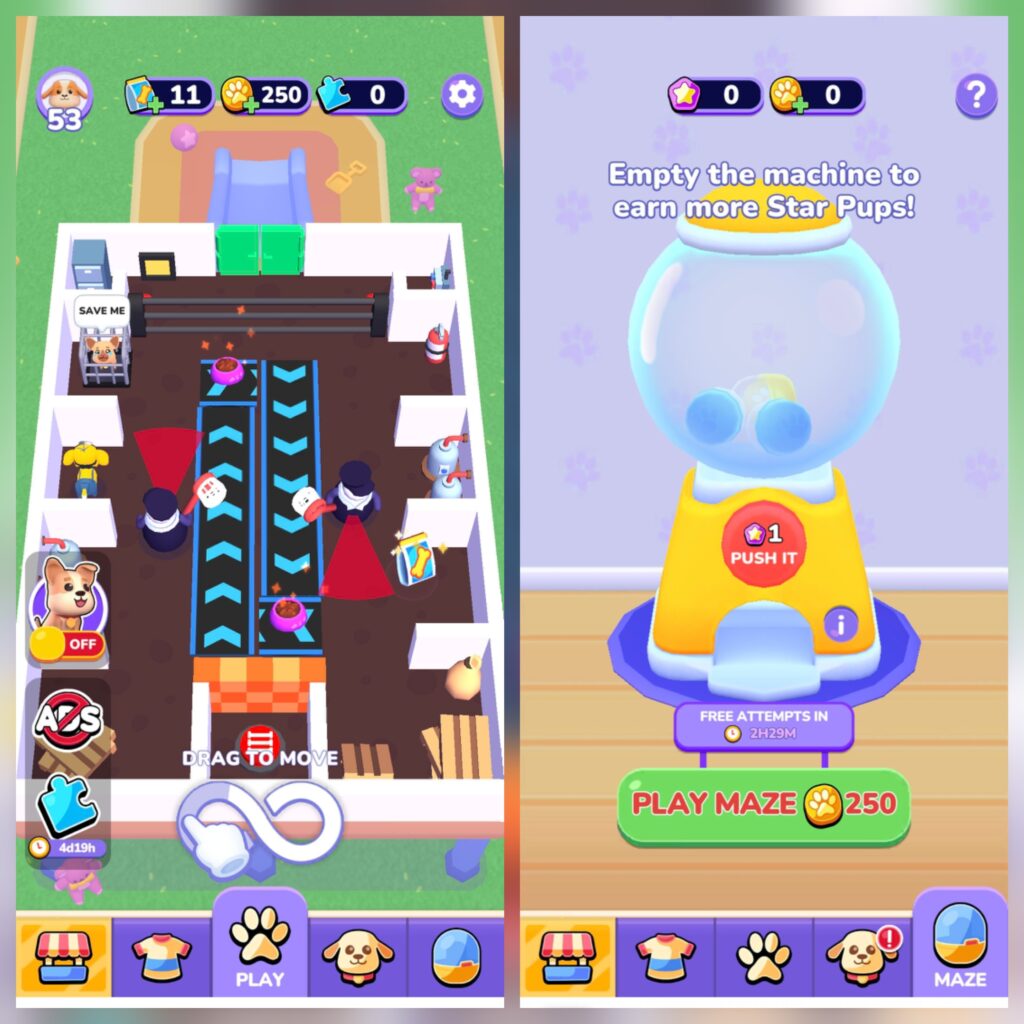
The core gameplay involves freely sliding (DRAG TO MOVE) to plan an escape route through the maze for the puppy. This requires some path planning and spatial imagination, but the strategic depth is limited. Players mainly feel a sense of control in executing their plan, rather than high-freedom creativity.
Different puppy characters may introduce subtle gameplay variations but do not change the game’s fundamental logic.
4. Ownership (9/10)
This is one of the core pleasures of the game’s design and a key to its long-term appeal. Players can:
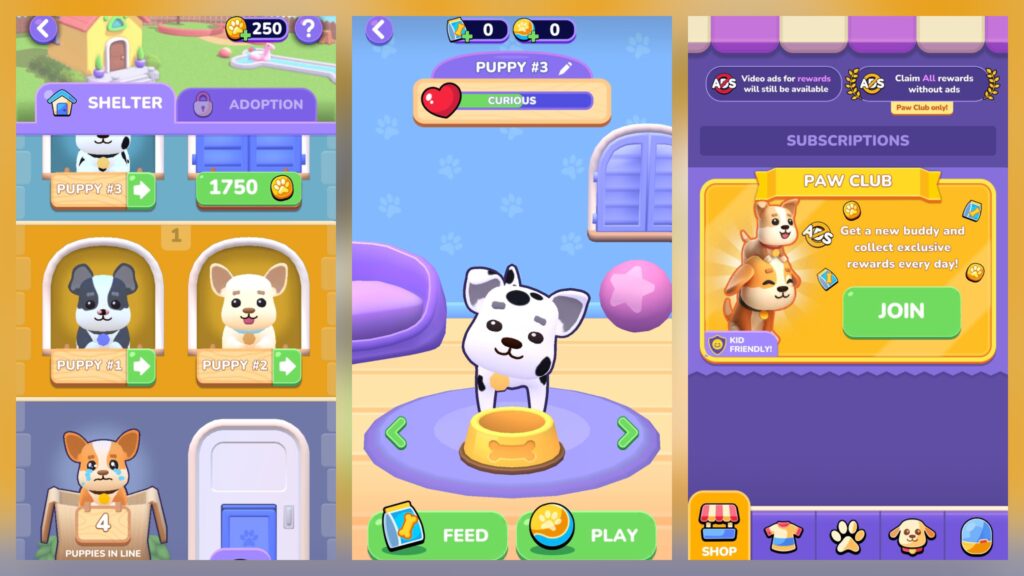
- Adopt Puppies: Unlock and nurture multiple puppies with different themes (e.g.,
COWBOY PUPPY), name them, and interact with them (FEED,PLAY). - Customize Appearances: Collect a wide variety of
SKINSandTRAILS.
This deep collection system transforms the player’s time and effort into tangible virtual assets, fueling a strong sense of ownership and the desire to keep accumulating.
5. Social Influence (3/10)
The game has almost no social features. This is a deliberate choice, making it a pure “escape-from-reality” solo game without social comparison or cooperative pressure. While this reduces the game’s virality and a certain form of stickiness, it also caters to players who want to enjoy relaxing moments alone.
6. Scarcity (9/10)
The game is a master at creating desire:
- PAW Club: The subscription service offers daily exclusive rewards and the privilege of ad removal, a classic “pay for convenience and perks” model.
- Limited-Time Content: All events and special rewards have countdowns, effectively creating a sense of “Fear Of Missing Out” urgency.
7. Unpredictability (7/10)
The game is adept at sprinkling randomness over its deterministic gameplay: “Surprise Gift” pop-ups after completing levels, temporary buffs gained from watching ads (e.g., “Double puzzle pieces for the next 5 minutes!”), and the uncertainty of obtaining new skins/puppies. These elements constantly stimulate player curiosity, keeping the repetitive process feeling fresh.
8. Avoidance (6/10)
The game leverages people’s natural aversion to loss:
- Subscription Driver: The biggest selling point is paying to remove all ads. Players pay not only to gain a benefit but also to eliminate the potential “loss” of disruptive ads during future gameplay.
- Countdown Pressure: Clear prompts for “SURPRISE GIFT” limited-time rewards (“GET IT!” or “LOSE IT”) force players to make quick choices between “gain” and “loss.”
Conclusion
Is This Your “Digital Pet” or Your “To-Do List”?
Dog Escape is a maturely designed hybrid: it successfully combines a warm emotional theme (saving puppies) with a set of highly efficient free-to-play mobile game monetization and retention mechanics.
- You’ll enjoy it if: You are drawn by the cute art style and heartwarming theme, enjoy light puzzle-solving and deep collection (skins, pets), and don’t mind encountering energy limits and ads in a single-player game. It can provide a relaxed, goal-oriented collection fun.
- You might tire of it if: You seek deep strategic challenges, rich social interaction, or are fatigued by the typical F2P business model of “energy-timers-popup ads-subscription services.” The late-game experience may feel more like completing a daily task checklist.
In short: The Octalysis chart tells the truth. This game uses “love” and “collection” as a sweet coating. Its core engine runs on “scarcity” and “ownership.” It offers warm companionship, but its design always guides your eyes toward the subscribe button.
Ready to start your rescue mission? Search for Dog Escape on Google Play to download and try it.
This analysis is based on the genuine gameplay experience of the 09GameReview team and the Octalysis framework. The review is neutral and provided for reference.
Leave a Reply