
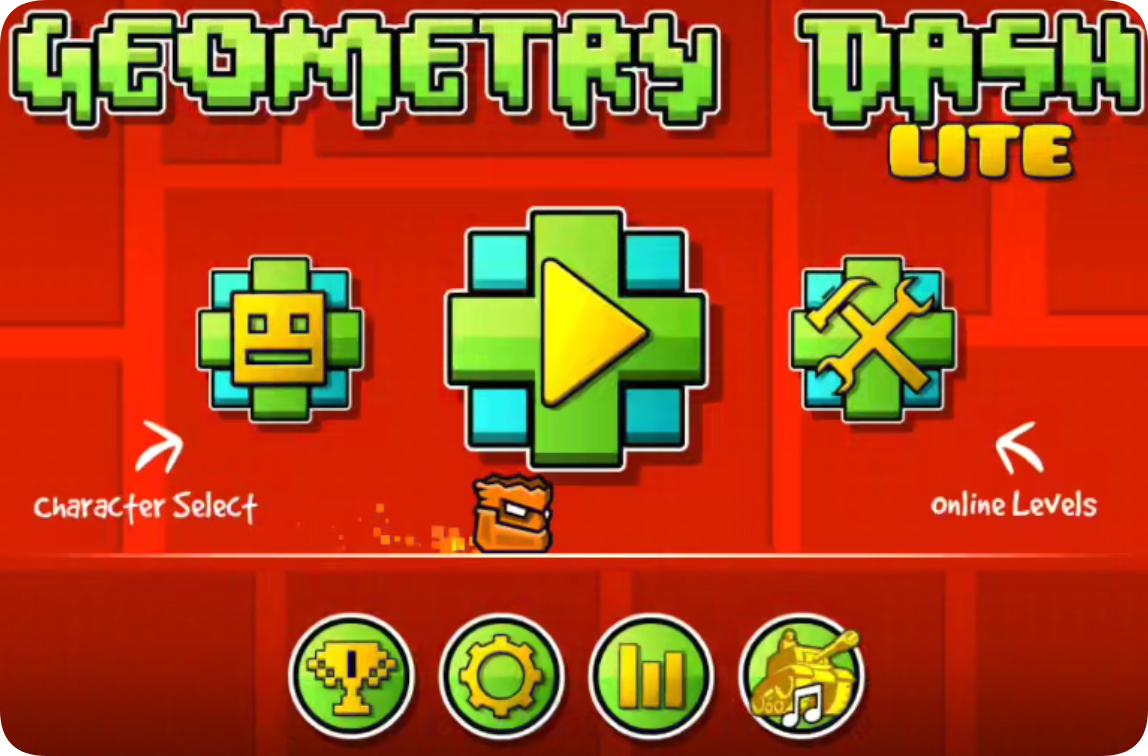
Geometry Dash Lite is a rhythm-based platform game where players guide a geometric character through increasingly complex levels timed perfectly to electronic music. You tap or hold to jump, flip gravity, and ride ships or balls—all synced to beats. The visual style is neon-bright and fast, the controls minimal, yet the challenge intense from the very start.
To better understand why this free version remains compelling for both newcomers and veterans, let’s explore its Octalysis breakdow
Octalysis Rating Table
| Core Drive | Score (1-10) | Brief Description |
|---|---|---|
| Meaning | 6 | The sync of music and action gives each move a purpose, though narrative depth is minimal. |
| Accomplishment | 8 | Perfecting levels, unlocking icons and beating practice checkpoints provide clear milestones. |
| Empowerment | 7 | One-touch controls but high skill ceiling — players gain deep mastery over mechanics. |
| Ownership | 5 | Icon and color unlocks give some identity, but content is limited compared to the full version. |
| Social Influence | 4 | Leaderboards exist, but no extensive social features in Lite version. |
| Scarcity | 6 | Free version limits levels and features, motivating upgrade or repeated play. |
| Unpredictability | 7 | Level design and rhythm transitions deliver surprise challenges in familiar mechanics. |
| Avoidance | 4 | Failure means starting over, which can frustrate; low penalty but high restart cost. |
Evaluation Notes:
Scoring range: 1–10. Higher scores reflect stronger implementation of the core drive and greater player motivation.
GScore (Gamification Score): Calculated using the Octalysis Framework tool.
Octalysis Radar Chart

With the chart overviewed, let’s dive deeper into each core drive to see how the game performs in detail.
Detailed Analysis
1. Meaning (6/10)
Geometry Dash Lite delivers meaning through its audio-visual coupling: each jump and form-change aligns with the music beat, making every action feel intentional. While there’s no overarching story, the rhythm provides a constant sense of purpose. Many players sense the “flow” of gameplay more than a narrative arc.
2. Accomplishment (8/10)
The game’s standout strength lies in achievement: clearing a hard level, hitting perfect timing, or finally navigating a ship section brings strong satisfaction. Practice mode helps players break down tough sections, and each unlocked icon or color adds tangible progress.
3. Empowerment (7/10)
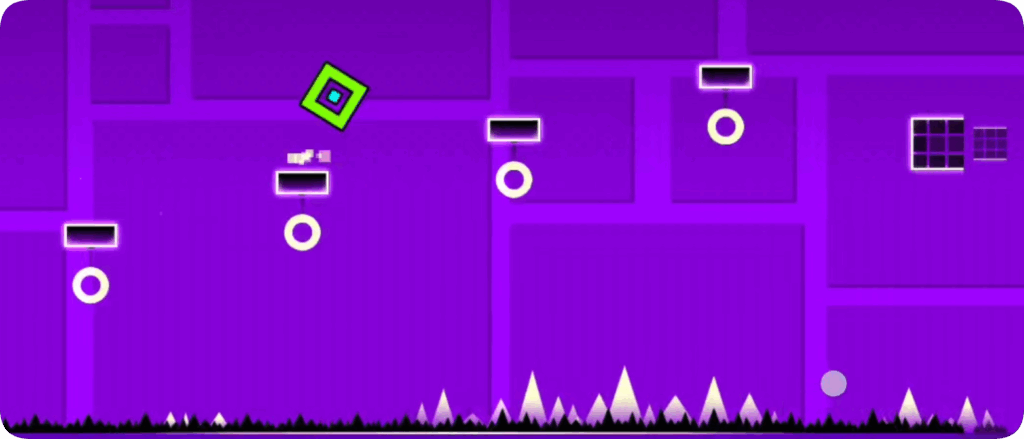
Despite the simple controls, players quickly sense deeper mastery: switching between Cube, Ship, Ball, Wave forms changes gameplay substantially. As skill improves, the player feels in control of timing, movement and rhythm rather than being at the mercy of level design.
4. Ownership (5/10)
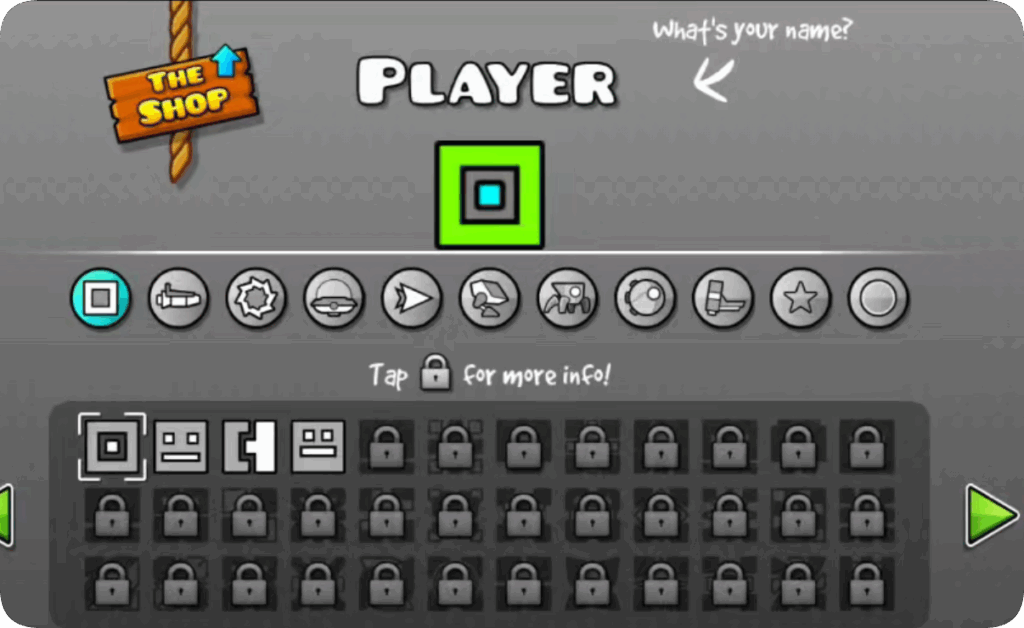
Unlocking icons and colors gives players a visual identity, yet the Lite version’s limitations (fewer levels, no full user-level editor) reduce long-term sense of ownership. For players who want to build and explore custom levels, the full version is more compelling.
5. Social Influence (4/10)
Leaderboards and score sharing exist but are not the central draw in Lite. Most engagement comes from personal bests and solo mastery. Some community members highlight lack of deeper multiplayer or creation tools as a drawback.
6. Scarcity (6/10)
The “free so far” model uses scarcity effectively: limited official levels and fewer features than paid version encourage repetition, improve skill, or upgrade. However, the scarcity isn’t so aggressive that it shuts out free players.
7. Unpredictability (7/10)
Level design throws rhythm and movement changes at the player—gravity flips, wave segments, ship transitions all occur with little warning. These mechanics keep even experienced players on edge, preventing the run-through from becoming rote.
8. Avoidance (4/10)
Failing a jump resets the level, which feels harsh, but offers immediate retry. The penalty is low in terms of progress lost, but the repeated restarts can frustrate some. This design encourages persistence rather than avoidance.
Overall Summary & Recommendation
After analysing all eight core drives, it becomes clear that Geometry Dash Lite thrives on accomplishment and empowerment—delivering high-skill rhythm thrills in a compact free format.
For players seeking a fast-paced, polish-driven rhythm-platform experience, this Lite version is a strong entry point. The main weaknesses—limited content and occasional frustration from difficulty spikes—make it better suited for those who enjoy mastery and retries.
Leave a Reply