
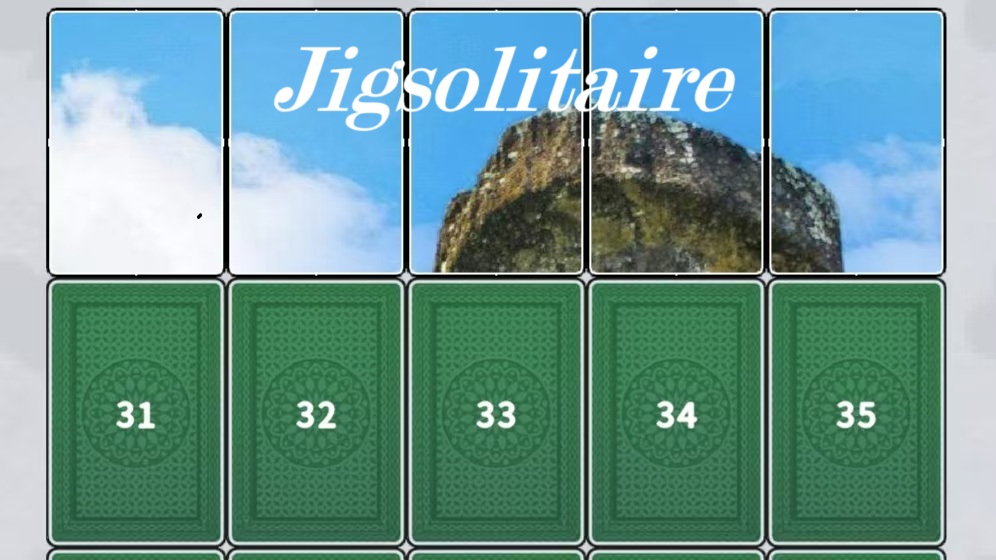
As a mobile gamer who checks the US casual game charts daily, I have to talk about Jigsolitaire – a game that blends classic solitaire with puzzle mechanics. It’s currently #1 on the US free charts, but after an hour of immersion, I’m left with mixed feelings. While the core concept is fresh, the experience is seriously dragged down by ads and design issues. Let’s break down its strengths and weaknesses using the Octalysis Framework.
Octalysis Rating Table
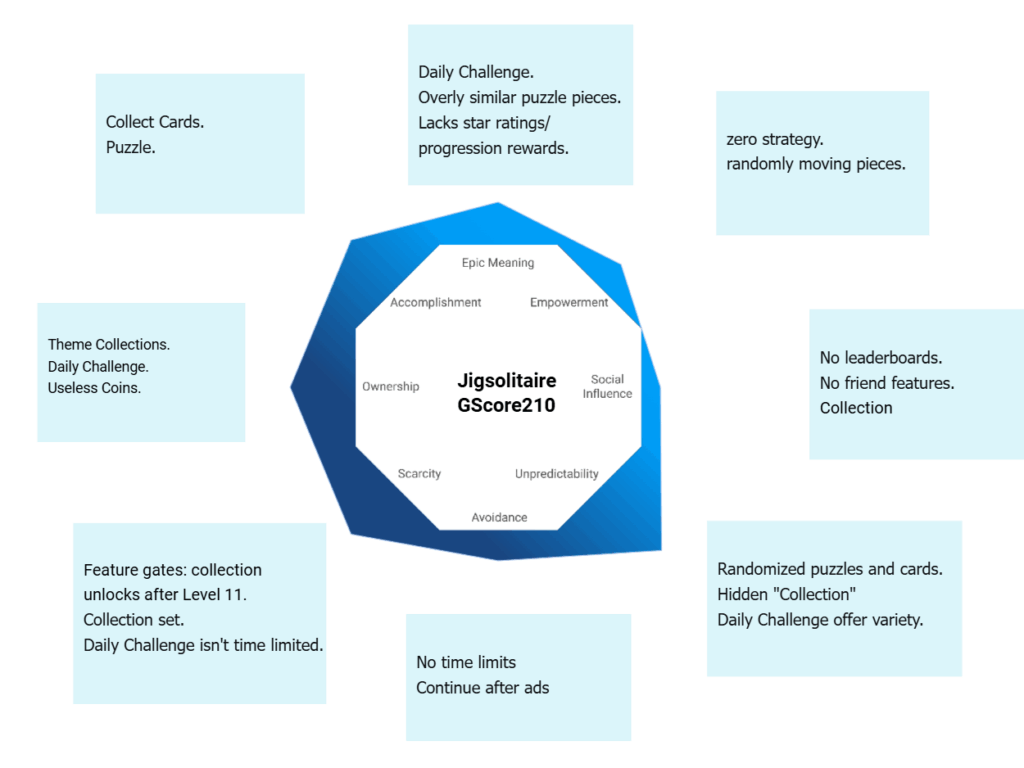
Here’s 09GameReview’s evaluation of Jigsolitaire across the 8 Core Drives, based on actual gameplay.
| Core Drive | Score (1-10) | Evaluation Description |
| Epic Meaning | 4 | Weak “collection” theme; players focus more on puzzle frustration than story |
| Accomplishment | 6 | Clear level progression (Level 1→8→25+/Daily Challenge), but lacks star ratings or progression rewards; overly similar puzzle pieces make achievements feel random, not skill-based |
| Empowerment | 3 | Players report the “only way is randomly moving pieces”; almost zero strategy |
| Ownership | 6 | Theme collections and daily check-ins create belonging, but useless coins severely undermine virtual property value |
| Social Influence | 2 | No leaderboards or friend features; purely solo experience |
| Scarcity | 6 | Feature gates (e.g., Collection unlocks after Level 11), collection sets; Daily Challenge isn’t time-limited |
| Unpredictability | 8 | Randomized puzzles and cards; hidden “Collection”; “Daily Challenges” offer variety, though core loop is repetitive |
| Avoidance | 3 | No time limits; can continue after ads, but frequent ad interruptions break flow |
Evaluation Notes:
Scoring range: 1–10. Higher scores reflect stronger implementation of the core drive and greater player motivation.
GScore (Gamification Score): Calculated using the Octalysis Framework tool.
Octalysis Radar Chart
Radar Chart Shows a “Small Octagon”
The radar forms a “small octagon” – a severely unbalanced and motivationally weak shape. All dimensions score low, with no core drive forming an effective peak. Its short-term popularity likely comes from the novel “card + puzzle” concept, but long-term retention looks poor due to lacking sustained play motivation.
Detailed Analysis
1. Epic Meaning (4/10)
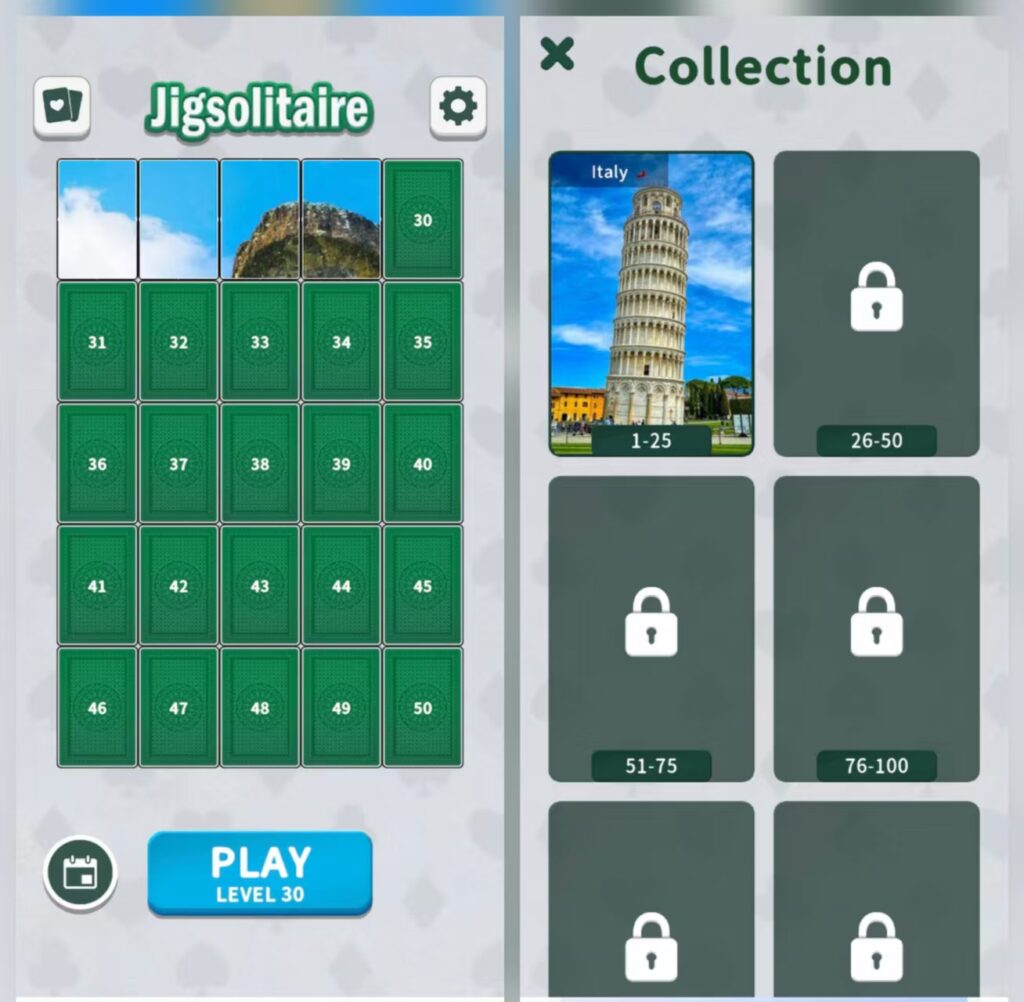
The game sets a goal through themed collections like “Italy” but lacks any story, characters, or world-building. The “Collection” is just static images with no emotional connection.
2. Accomplishment (6/10)
This is the game’s relatively stronger area. Clear progression is the core drive:
- “Puzzle Complete” pop-up after each level.
- Collecting completed puzzles to fill the album (unlocked only after Level 26 – delayed and weak feedback).
- Unlocking new gameplay at Levels 12 and 26 provides staged achievements.
However, frequent ads severely disrupt this sense of accomplishment – you watch an ad after every single level.
3. Empowerment (3/10)
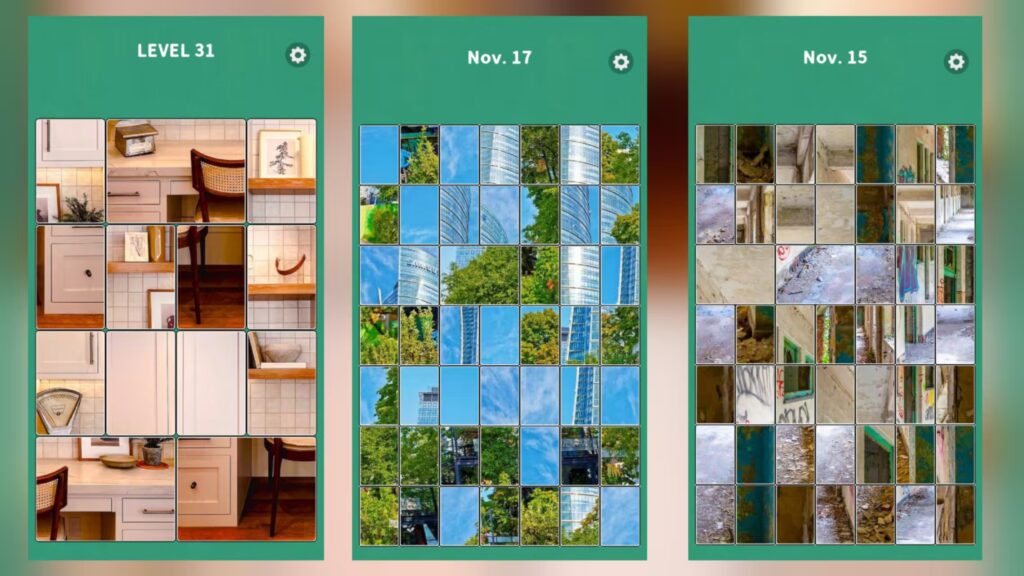
Jigsolitaire’s core loop – completing puzzles to get moves in solitaire – is a clever empowerment idea. But highly similar puzzle pieces replace strategy with trial and error. It tests observation skills more than active planning. On top of that, the constant, forced ads break your concentration and make you feel less in control, which really ruins the fun.
4. Ownership (6/10)
The card collections create some ownership drive – each card feels like a “digital asset.” This sparks collection and possession urges, but the high unlock barrier (Level 12) means players barely feel this system early on, slowing ownership building.
5. Social Influence (2/10)
I found no friend features, leaderboards, or co-op challenges. The “Daily Challenge” is uniform and unlimited. While it might have basic score sharing, you can’t see friends’ progress or compete.
Though collections have some social potential, getting hidden cards requires “completing 24 levels” – a high barrier with slow feedback. This is a clear weakness in today’s gaming landscape.
6. Scarcity (6/10)
The “Daily Challenge” isn’t the main scarcity driver here – it’s not “one chance per day” (you can make up missed days by watching ads).
The real scarcity lies in the greyed-out uncollected cards and the level gates locking new theme zones (e.g., Italy/26-50…201-225).
7. Unpredictability (8/10)
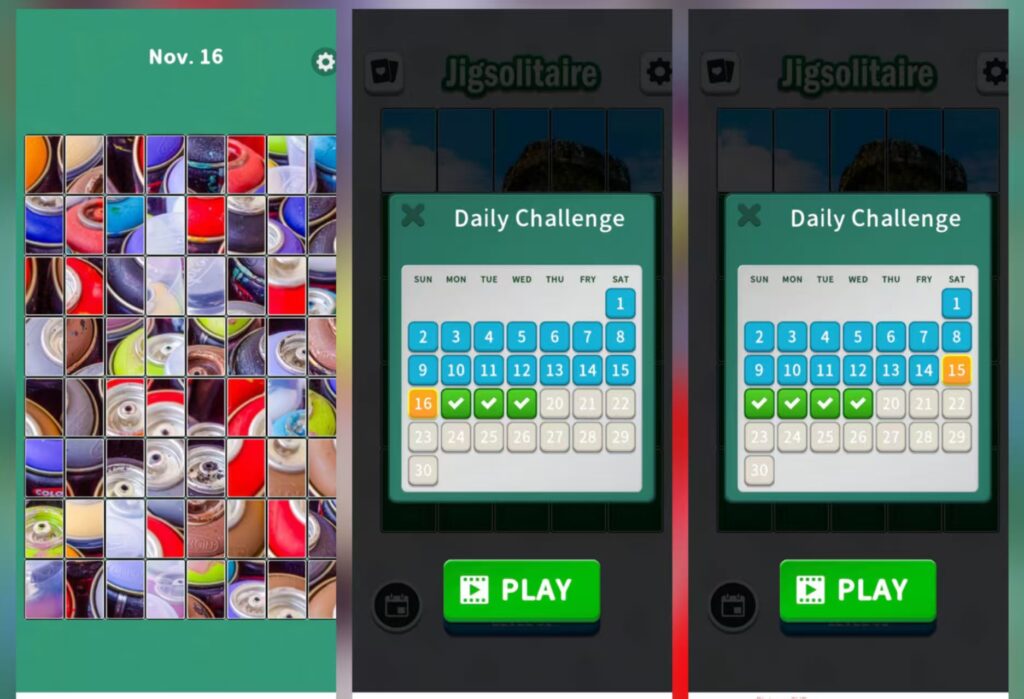
The puzzle piece arrangements and card layouts in each level are randomized, providing basic replay value and a sense of the unknown.
The “Daily Challenge” offers fresh, uncharted puzzle combinations every day. Meanwhile, the yet-uncollected cards in the “Collection” spark players’ curiosity, motivating them to uncover the mystery and reveal what they look like.
8. Avoidance (3/10)
This game barely uses “loss aversion.” You don’t lose collected cards. However, the ad implementation creates a negative, frustrating experience – you’re losing valuable time and smooth gameplay.
Conclusion:
Topped Charts with Aggressive Ads?
From my experience:
- Unlock Collection at Level 26, Daily Challenge at Level 12.
- Core gameplay uses puzzle pieces to enable solitaire moves, but many pieces look too similar, often relying on guesswork.
- Forced ads after every level, plus a useless coin system – it’s like an “ad simulator” wrapped in a game shell.
If you can tolerate (or pay to remove) ads, it works as a time-killing casual puzzle game. But don’t expect deep strategy or a satisfying long-term journey.
[Read More] https://us.09gamereview.com/blog/
[YouTube] https://www.youtube.com/@09GameReview
[Google Play Store] https://play.google.com/store/apps/details?id=com.gamincat.jigsolitaire
Leave a Reply