
Last time, 09GameReview used the Octalysis Framework for an in-depth analysis of Jigsolitaire. Today, after trying Jilmerge, which shares the same “cards + puzzles” formula, I can’t help but notice: it’s the same basic recipe, yet the overall experience is indeed superior. No wonder it has skyrocketed to the top of the popularity charts. Let’s again use the Octalysis Framework to analyze it across the 8 key dimensions and see where the differences truly lie.
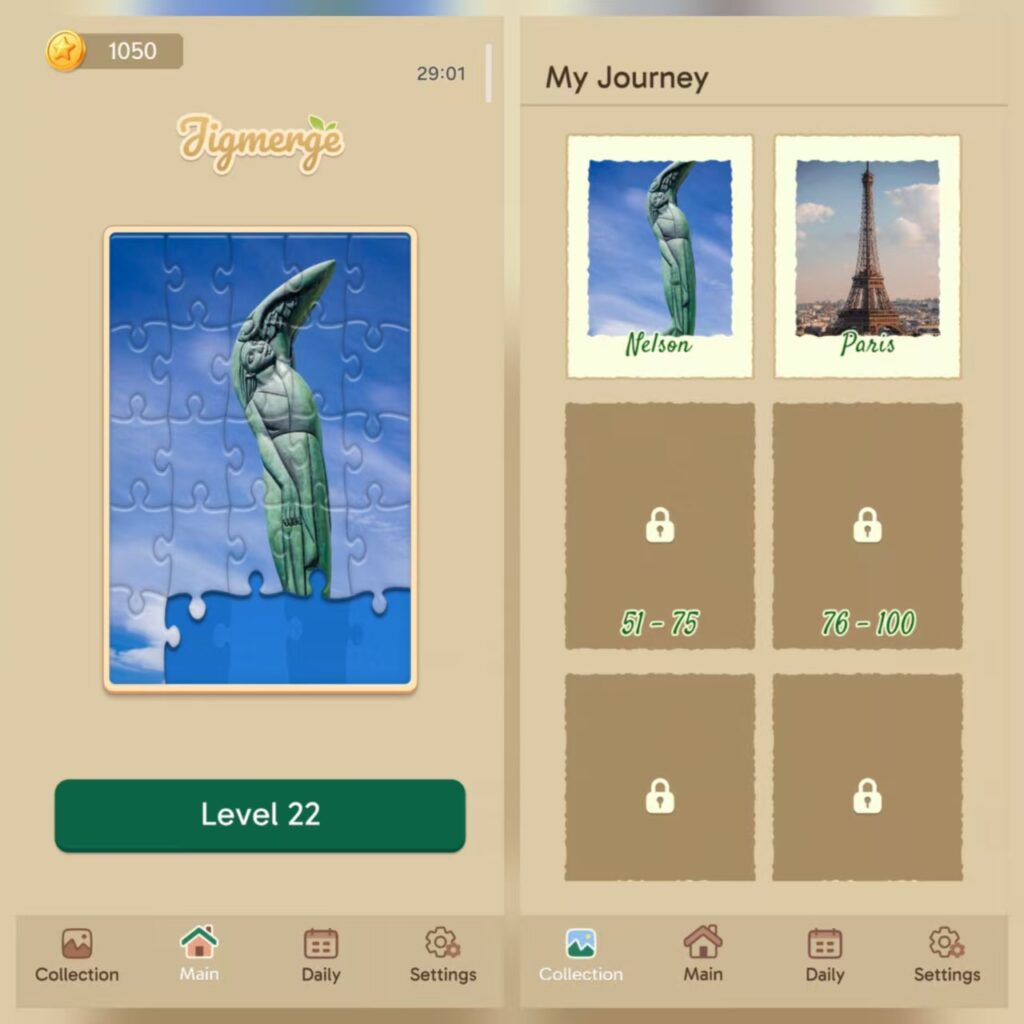
The core gameplay is simple: complete card puzzles across “24 levels” to finish one leg of a journey, then unlock a corresponding themed card photo (e.g., “Nelson”, “Paris” – landmarks from a country or city).
Octalysis Framework Key Dimension Score Comparison
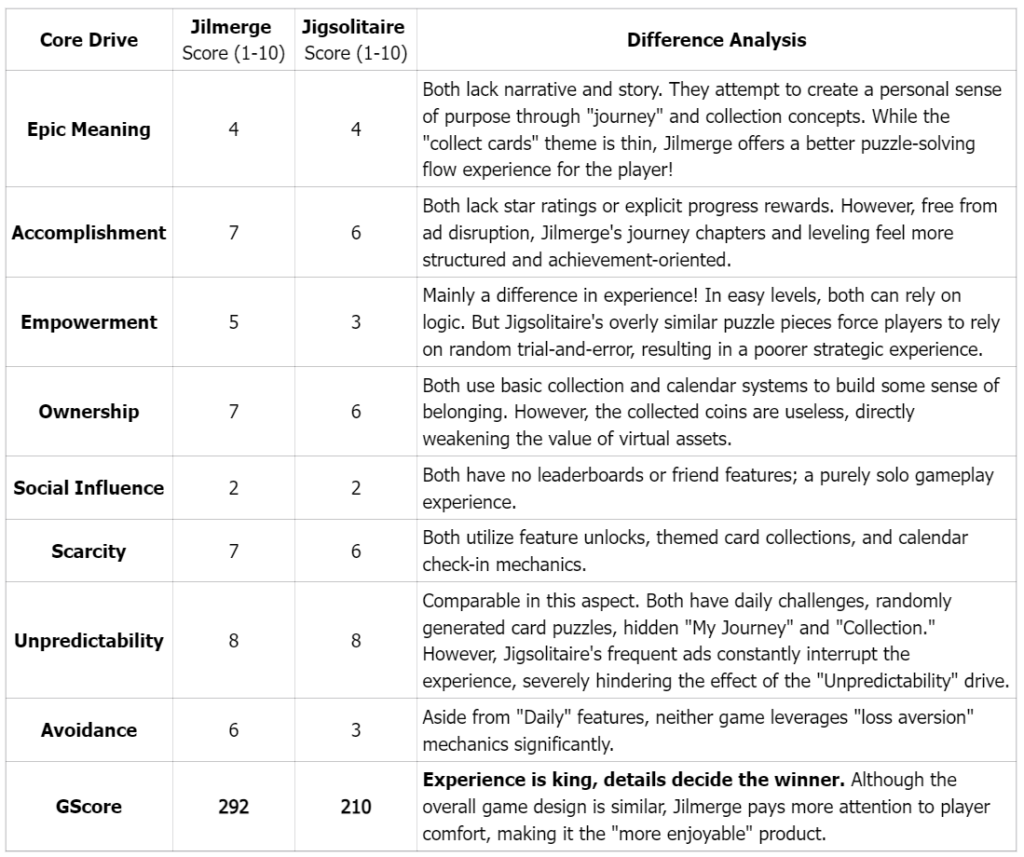
Evaluation Notes:
Scoring range: 1–10. Higher scores reflect stronger implementation of the core drive and greater player motivation.
GScore (Gamification Score): Calculated using the Octalysis Framework tool.
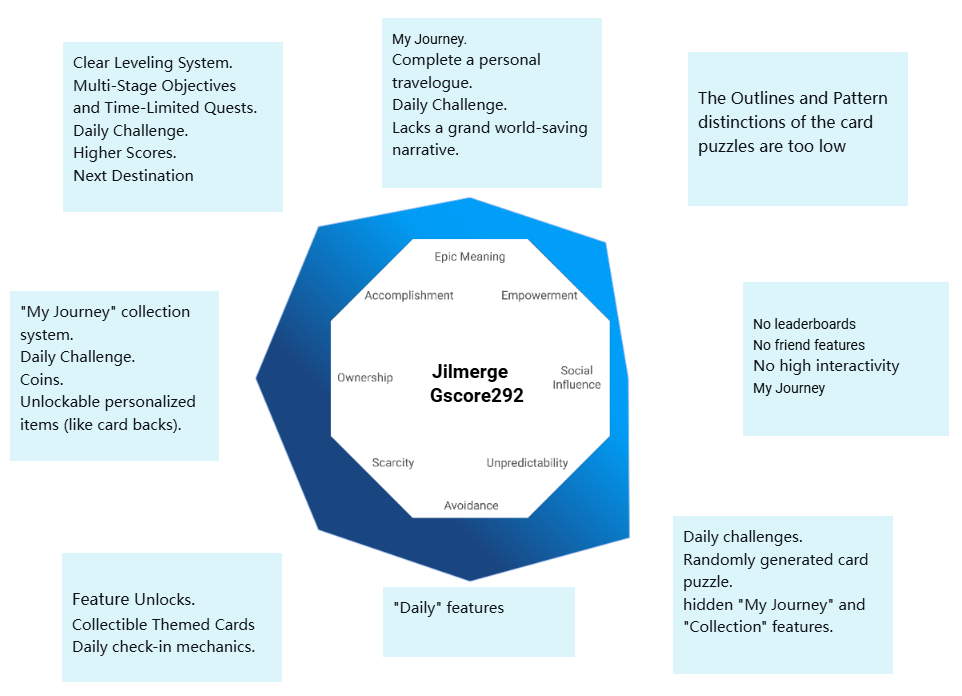
Octalysis Radar
Prominent Strengths, Clear Weaknesses
The chart clearly shows that Jilmerge‘s motivational profile forms a “sharp star shape” rather than a balanced circle. The game excels solidly in core areas like Accomplishment, Empowerment, and Ownership, which forms its foundation. This indicates it’s an excellent single-player puzzle game focused on personal mental challenge and achievement accumulation. It provides an outstanding flow-state experience for goal-oriented players who enjoy logical puzzles and collection.
In-Depth Octalysis Framework Evaluation
1. Epic Meaning & Calling – Score: 4/10
Like Jigsolitaire, Jilmerge also lacks character-driven narratives or a grand overarching worldview. Both games attempt to create a faint sense of narrative through thematic collection albums like “My Journey” and segmented goals (e.g., 51-75, 76-100), aiming to make players feel like they are “completing a journey or collection quest.“
2. Development & Accomplishment – Score: 7/10
The game features clear level progression. Each level has defined score targets and time records, motivating players to pursue faster, more perfect completions. Difficulty unlocks and indicators like “Hard Level” and “Unlocked at Level 26” allow players to see their progress trajectory and upcoming challenges.
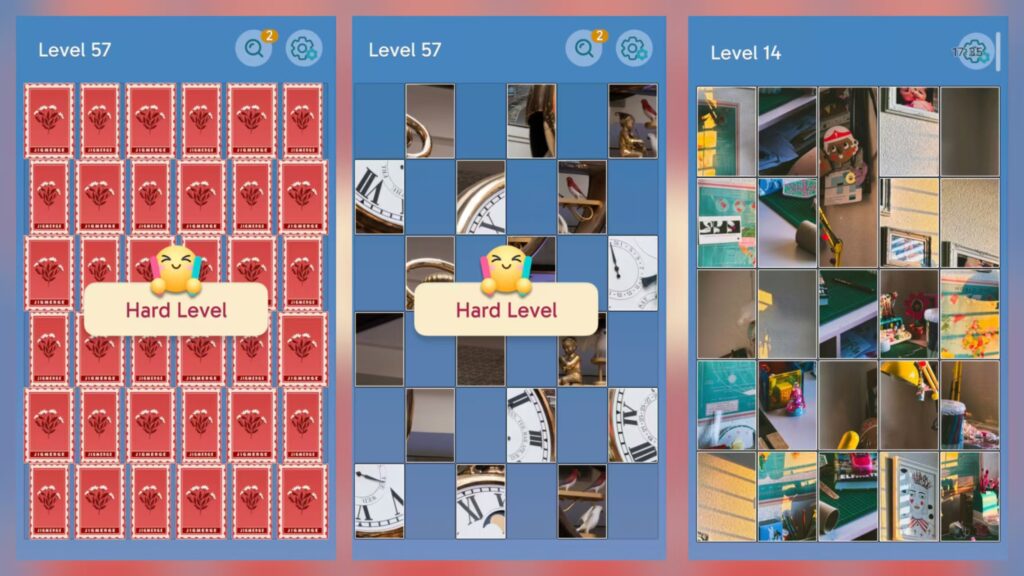
3. Empowerment & Creativity & Feedback – Score: 5/10
The game tries to offer players some strategic space. However, when the outlines and pattern distinctions of the card puzzles are too low, players cannot rely on observation and logical deduction to estimate the approximate position of pieces or think through the optimal placement path to complete the puzzle. Consequently, they miss out on the feedback that “the strategy behind my last move was effective.” This strategic experience is only felt more directly in the simpler levels.
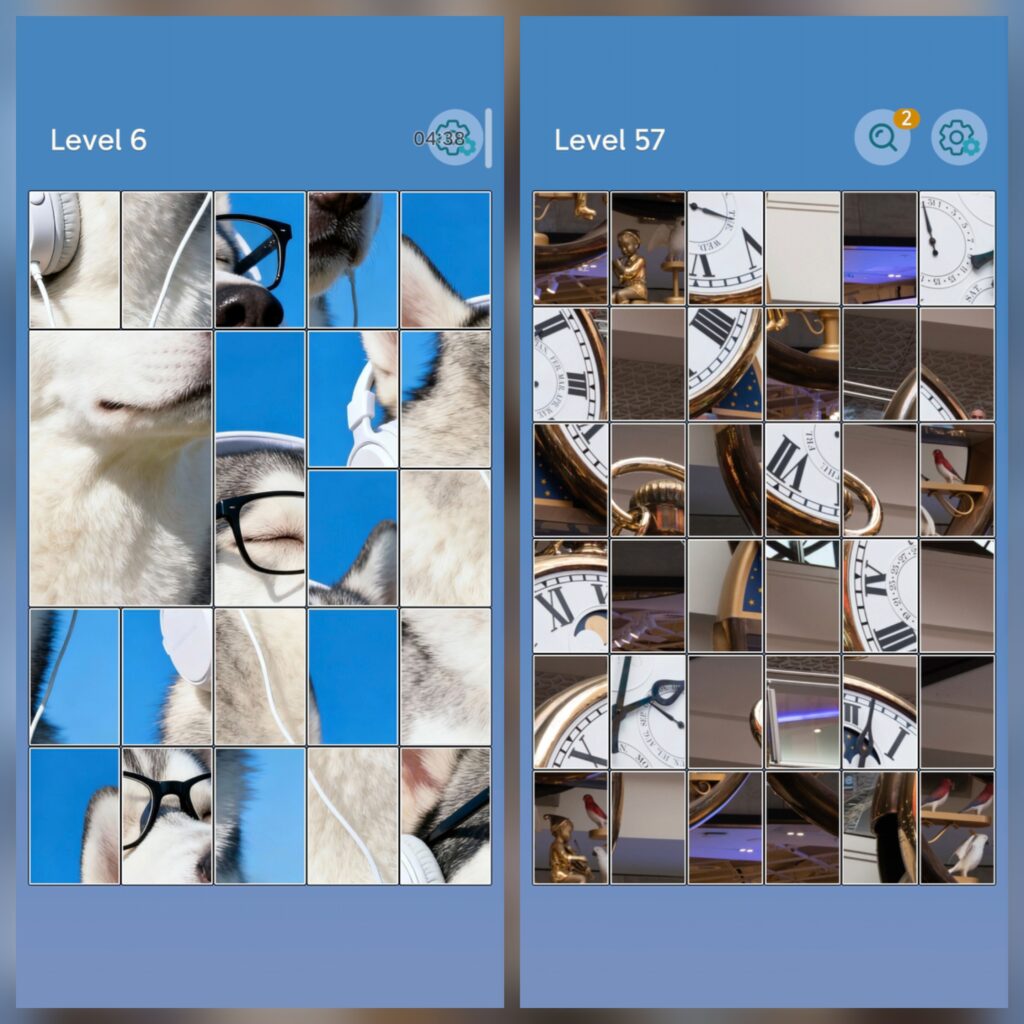
4. Ownership & Possession – Score: 7/10
The game uses several conventional methods to make you feel like you “own” a lot of things: the “My Journey” collection system, daily rewards, coins, and new levels/functions unlocked with progression. However, these virtual assets largely serve no practical purpose, weakening the perceived value of ownership.
5. Social Influence & Relatedness – Score: 2/10
Similar to Jigsolitaire here as well, the game shows no friend features, leaderboards, or cooperative challenges. Perhaps, at this stage, the game does not yet rely on social elements to maintain player retention.
6. Scarcity & Impatience – Score: 7/10
The game primarily uses the following designs to create desire:
- Feature & Level Locks: Prompts like “Unlocked at Level 46” make you look forward to higher-level content.
- Daily Check-in Rewards: The calendar system creates a sense of scarcity and daily habit with the “log in daily, don’t break the streak” mentality.
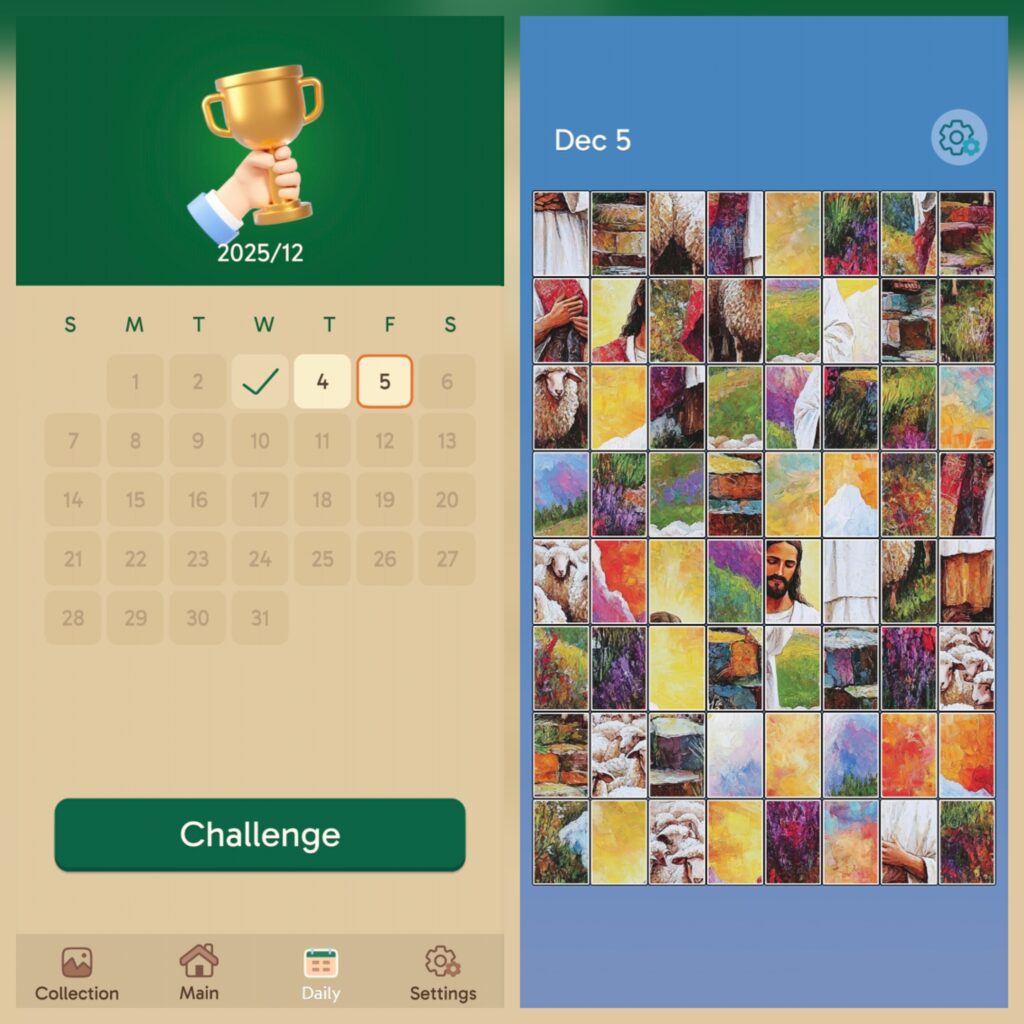
7. Unpredictability & Curiosity – Score: 8/10
This is a relatively strong driving force.
- What’s the next card? The core charm of card-based gameplay lies in reacting to the unknown sequence.
- What does the completed puzzle look like? Until all pieces are in place, you remain curious about the final image.
- What’s the next theme? Different chapters in “My Journey” (e.g., Nelson, Parus) hint at varying visual themes, enticing you to explore.
8. Loss & Avoidance – Score: 6/10
Aside from missing the day’s gameplay experience and accumulated rewards if you break your “Daily” streak, the game lacks significant loss-driven design. It primarily relies on the gameplay being “more fun” to keep players engaged. Failing a level? Just watch a short ad to immediately restart…
Conclusion & Insights
Experience is King, Details Decide the Winner
In summary, Jilmerge‘s overall gamification appeal sits at an above-average level.
For Players: If you enjoy solo challenges, steady progression, the satisfaction of completing collections, and don’t mind the lack of social interaction, then this game’s core drives highly match your needs.
For Designers: If the goal is to expand the user base and improve long-term retention, future updates might consider:
- Addressing the Social Shortcoming: For example, adding simple friend-circle leaderboards, puzzle completion time trials, or asynchronous cooperative gameplay.
- Enhancing Epic Meaning: Infusing “My Journey” with richer storylines and characters, making the puzzle-collecting process feel more like unraveling a coherent mystery or exploring a world.
[Read More] https://us.09gamereview.com/blog/
[YouTube] https://www.youtube.com/@09GameReview
[Google Play Store] https://play.google.com/store/apps/details?id=com.fashionlink.northstone
Leave a Reply